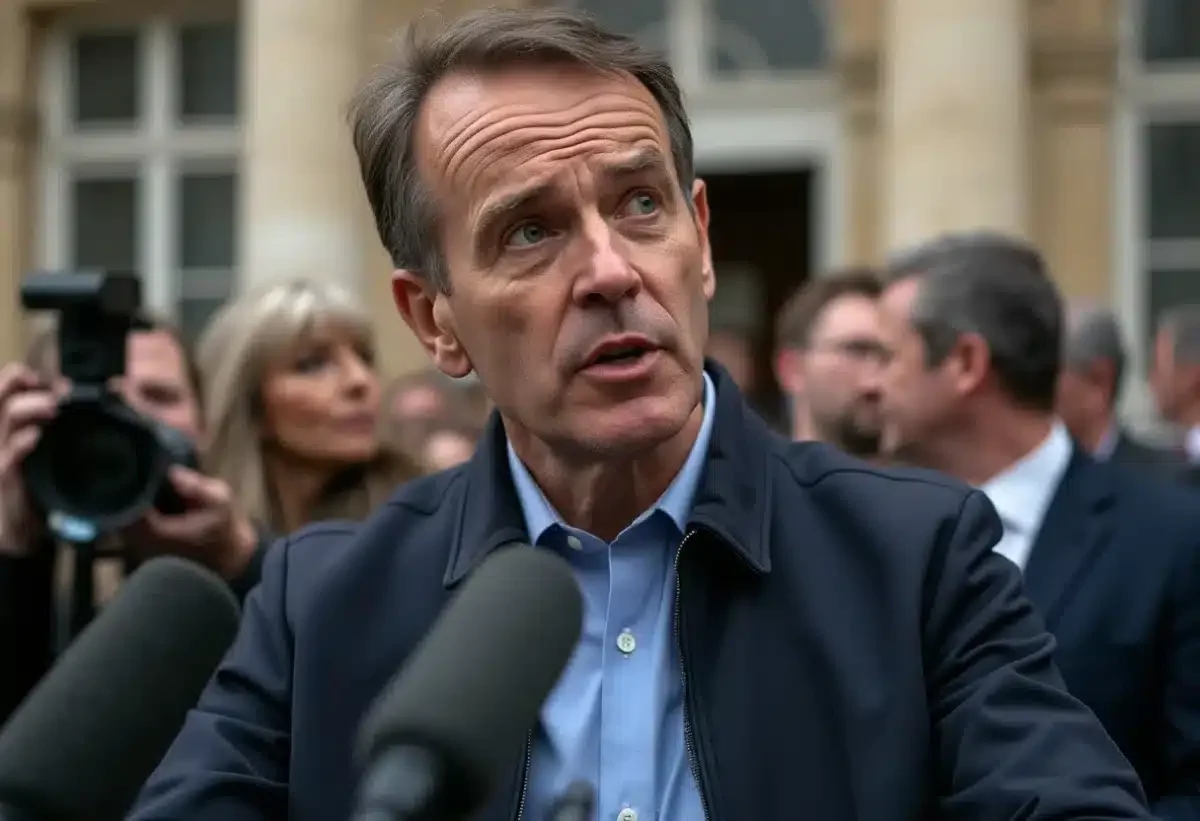
French politicians, like any public figure, are subject to constant scrutiny from the media and the public. The boundary between their professional and personal lives is often blurred, raising questions about transparency and respect for their privacy. Publicly accessible information varies, ranging from asset declarations to more personal details such as family relationships or health issues.
French laws strictly regulate the disclosure of certain information, but expectations of transparency can sometimes conflict with the right to privacy. Politicians must navigate between these two demands while ensuring their credibility and integrity.
The limits of the privacy of French politicians
French public figures, particularly politicians, often find themselves at the crossroads of transparency and privacy. The revelation of a private sexual video led Benjamin Griveaux to withdraw from the Paris mayoralty, illustrating the dangers of media exposure.
Emmanuel Macron, for his part, developed a significant storytelling approach with his wife Brigitte Macron during the 2017 presidential campaign. This strategy helped strengthen the image of the presidential couple but also opened the door to numerous intrusions into their private lives.
Nicolas Sarkozy and Carla Bruni Sarkozy frequently made headlines in Paris Match, sparking debates about the boundary between public and private life. Only the consent of those involved can legitimize this exposure.
Reactions and issues
Angélique Lamy, a lawyer specializing in image rights, reminds us that the protection of privacy is a fundamental right. However, the newspaper Le Charivari protests against what it describes as a monarchical power seeking to prevent the press from discussing the private lives of public figures.
The parents of Gabriel Attal, although having an indirect connection to political life, can also feel the impact of this exposure. The debate over the privacy of French politicians is far from settled, oscillating between the need for transparency and respect for individual rights.
- Privacy: a fundamental right regulated by law
- Transparency: a growing demand from society
- Consent: the key to legitimizing media exposure

Publicly accessible information and its impact
Publicly accessible information about political figures often includes personal and professional details, relayed by the media and social networks. Arnaud Saint-Martin, a sociologist at CNRS, emphasizes that this trend towards transparency contributes to a form of social surveillance. For example, Mounir Mahjoubi, former Secretary of State for Digital Affairs under the government of Édouard Philippe, came out on Twitter, a voluntary act of transparency that had media repercussions.
The impact of these revelations can be multifaceted. Bruno Jeudy, editor-in-chief at Paris Match for five years, observes that the boundary between public and private life becomes increasingly porous when personal information is made available to the public. Alexandria Ocasio-Cortez, often compared to Joe Biden for her democratic engagement, exemplifies how political figures are scrutinized and judged based on their private lives as much as their professional backgrounds.
- Social networks: A vector for rapid and massive dissemination of personal information.
- Traditional media: A relay that amplifies the impact of revelations.
- Consent and transparency: Key elements to legitimize this exposure.
The Constitutional Council and the CNIL (National Commission for Informatics and Liberties) play a fundamental role in the protection of personal data. Data protection laws, such as the Data Protection Act, strictly regulate the collection and processing of personal information. Public figures often find themselves in a gray area where the right to privacy clashes with the demand for transparency.