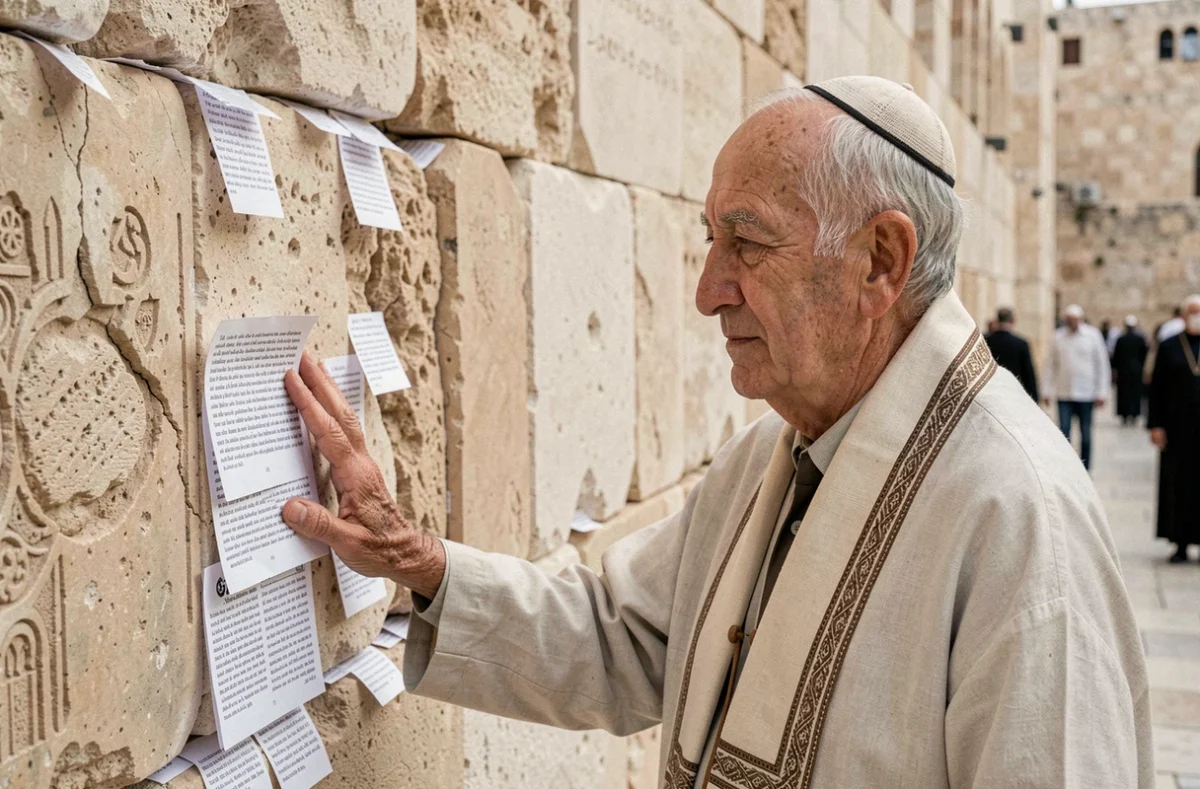
Israel, the Promised Land, is inextricably linked to its dominant faith: Judaism. These deeply rooted beliefs, built over millennia, shape the social, political, and cultural aspects of the nation. Jewish spirituality, with its ancestral rites, influences daily existence, dictating behaviors and societal interactions. It permeates legislation, education, and even festivities. Judaism, more than a religion, forges a national identity, leaving an indelible mark on Israel. It is a cultural thread, a sacred heritage that defines and unites the Israeli people, highlighting the undeniable influence of faith on society.
The foundations of the predominant faith in the Promised Land
The Promised Land, an essential notion at the heart of Jewish religious beliefs, embodies an ideal of freedom and autonomy for the Jewish people. It is a land blessed by God according to sacred scriptures, and His promise to Abraham has been one of the main foundations of Zionism. Believers of this faith firmly maintain the conviction that their divine right to this territory is indisputable.
The Zionist theological interpretation differs significantly from that adopted by other religious currents. Within the Jewish world itself, there are different viewpoints based on the interpretations given to biblical texts. Nevertheless, these different perspectives all share a common point: they are based on the idea that the land of Israel was given to the Jewish people by God Himself.
It should be noted here that a significant part of the debate revolves around the biblical concept known as “inheritance”. According to Zionist theological perspectives, this inheritance cannot be renounced or abandoned as it constitutes an irrevocable gift granted by God to the Jewish people.
However, this assertion is not universally accepted in all religious and political circles; some contest the unilaterality of this view, among other reasons, for its highly sensitive geopolitical implications today.
Influences and consequences of the major belief in Israeli social sphere
The State of Israel is a country rich in cultural and religious diversity, although it is predominantly Jewish. It is this dominant religion that shapes the social structure, the economy, and even the politics of the country. Despite this reality, one should not overlook the existence of other faiths such as Christianity or Islam that also contribute to the unique composition of this territory.
Judaism as the major religion significantly influences daily life. Most national holidays are based on the Hebrew calendar, including Yom Kippur, Passover, or Rosh Hashanah. Religious rites also dictate dietary habits, with kashrut rules indicating what can be consumed according to Jewish laws.
From an economic perspective, with certain holidays specific to Judaism like Shabbat, during which all professional activity is prohibited, there can be a significant drop in economic productivity during these periods. Nevertheless, this creates a unique balance between work and spiritual rest that many Israelis appreciate.
In political matters as well, the influence of Judaism proves to be predominant. There are several Israeli political parties whose platforms are heavily based on the Torah, such as “Shas” or the “United Torah Judaism Party.” These parties greatly influence not only the direction of the country but also its relations with other nations.
The indelible imprint of spirituality on Israel’s national identity
At the heart of Israeli national identity lies a deep and resilient interconnection with spirituality. This relationship has its roots in the rich and diverse history of the Jewish people while remaining central to contemporary struggles for defining Israeli societal values. To understand this lasting impact, one must explore the link between spirituality and identity: historical, cultural, and political.
Historically, Israel was born from the desire to establish a national home for the Jewish people after centuries of exile and persecution. The revitalization of their ancestral traditions was therefore intrinsically linked to their national aspiration. This included not only the observance of religious rituals but also a spiritual renaissance that contributed to forging a strong collective identity.
From a cultural perspective, spirituality underpins many major aspects of Israeli lifestyle, whether related to holidays or the arrangement of the weekend around Shabbat. These cultural expressions shaped by religion are much more than merely symbolic; they have real weight in daily interactions as well as in the shared sense of national belonging among citizens.
On a political level, this strong link between spirituality and identity also plays a key role in Israel, where religion and state are not completely separated as in some Western countries.