
Choosing reliable locksmithing equipment to secure a home means looking beyond the lock itself. The resistance of an entry point depends on the entire assembly: the door set, frame, hinges and lock.
For example, A2P certification is based on laboratory tests carried out on a specific configuration: the exact product reference and the cylinder intended for that assembly. Installing a certified lock on a door that has not been tested with it does not guarantee the stated level of protection.
New lock on an old door: when to replace the entire door set
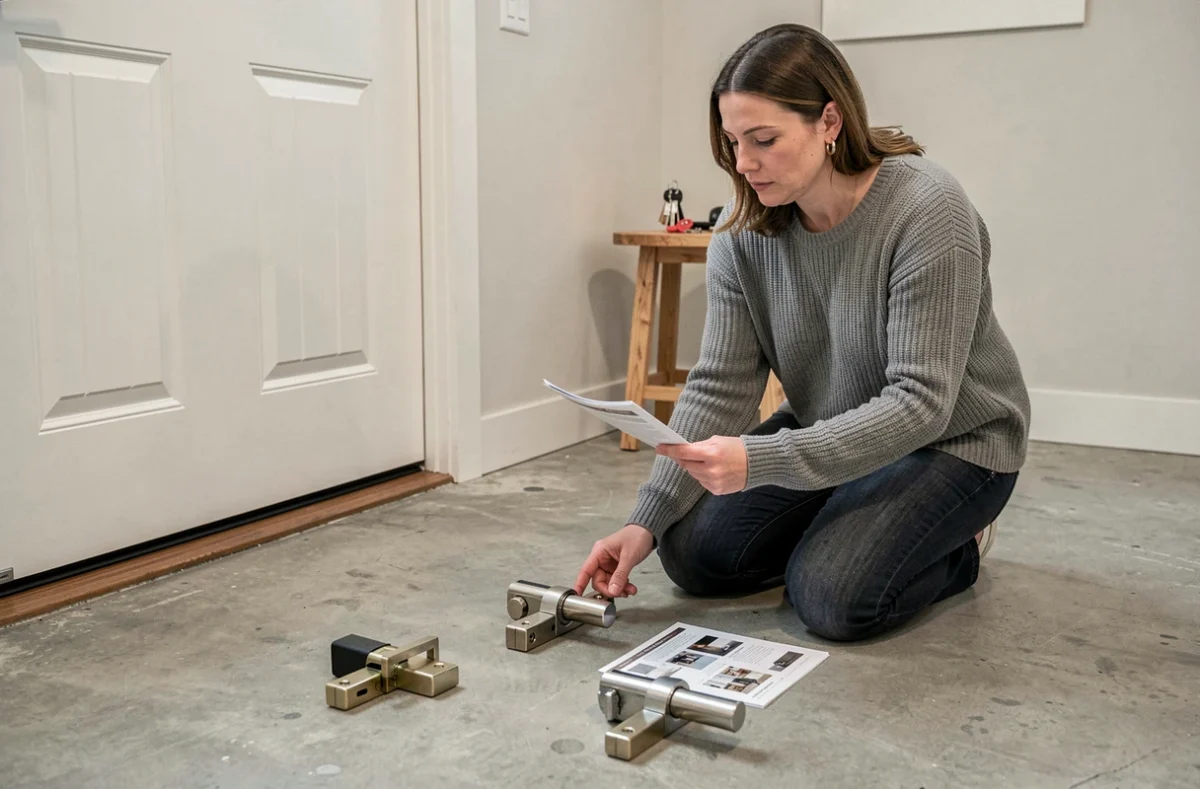
Most pages about choosing a lock assume that the door is in good condition. In reality, many older homes have warped frames, worn hinges or door leaves whose wood has shifted over the decades. Installing a multipoint lock on such a door is like securely locking a frame that could give way elsewhere.
Three signs can help you assess the condition of the door set: a visible gap between the door leaf and frame (more than one to two millimetres along the sides), scuff marks indicating warping, and a frame that moves when you press firmly against it. If two of these signs are present, replacing the entire door set offers better protection than fitting a high-end lock to a weak frame.
If the frame is still sound but the door has weaknesses in specific areas, a locksmith can reinforce the anchor points with hinge-side security strips and replace the cylinder without changing the entire assembly. The condition of the existing door therefore determines the choice of equipment, not the other way around. Among the Serrurerie Valbusa equipment, several ranges of cylinders and locks are designed to fit a variety of existing configurations, avoiding the need to force a standard product onto an unusual frame.
A2P certification and home insurance: what to check before buying
A2P certification, issued by the CNPP, remains France’s most reliable benchmark for comparing the resistance of locks. There are three levels, each corresponding to a higher resistance rating tested in a laboratory. The times associated with these ratings are used to classify products, not to predict how long a burglar would take to break into a particular door in real-world conditions.
One point is often overlooked: the A2P logo on the packaging does not automatically certify the configuration installed in your home. Certification applies to a specific product reference and a specific cylinder. If the cylinder fitted differs from the one specified in the certified assembly, the resistance guarantee no longer applies.
Checking that the reference on the invoice matches the one listed in the CNPP directory is the only way to ensure that the equipment installed is the product that was tested.
Theft cover in your insurance policy
Some home insurance policies require an A2P-certified lock to cover losses resulting from a burglary. Others have no specific requirements. This variation makes it essential to check your policy before buying. Keeping the invoice and the exact reference of the product installed will help you prove compliance if you need to file a claim.
Equipment that does not meet the requirements of your policy may result in a claim being denied, even if the lock itself was well made. Reading the theft cover clause before going to a shop or contacting an installer can help you avoid this unpleasant surprise.
Number of locking points: a factor to put into perspective
A common assumption is that a five-point lock is safer than a three-point lock. The number of locking points contributes to overall resistance, but it is not proof of security on its own. Two locks with the same number of points can offer very different levels of protection depending on the quality of their components, certification of the exact product reference and compatibility with the door.
Several factors matter more than simply counting the locking points:
- A2P certification for the complete product reference (lock and matching cylinder), which confirms that it has undergone resistance testing under controlled conditions.
- The type of cylinder fitted: a cylinder with anti-picking and anti-drilling protection and a security card limits key duplication and the most common forms of mechanical attack.
- The quality of the installation and the strength of the frame, which determine how well the assembly holds up under force. A poorly installed five-point lock on a weakened frame offers less resistance than a three-point lock properly anchored in a sound frame.
When comparing two products, it is therefore better to focus on certification for the exact product reference and compatibility with the existing door, rather than on a marketing claim based on the number of locking points.
Lock cylinder: identifying the protections that matter
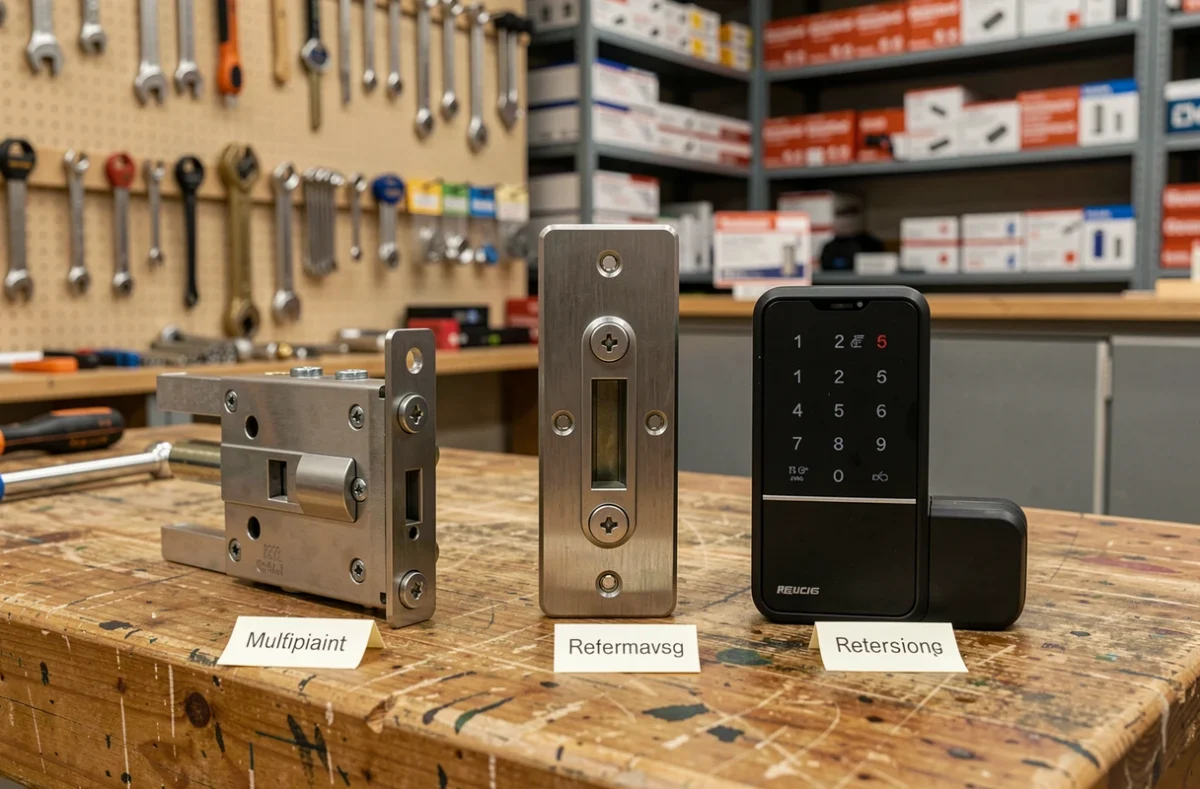
The cylinder is the most exposed part of a lock. It is the preferred target in a quick break-in attempt: drilling, pulling or picking. A quality cylinder incorporates several protective features, but they are not all equally effective.
An anti-drill pin (a hardened steel insert) and anti-picking protection (security pins with a complex profile) are the minimum requirements for a cylinder intended for an entrance door. A cylinder with a security card prevents keys from being copied without authorisation, reducing the risk associated with lost or stolen keys.
The protective escutcheon or rose surrounding the cylinder on the outside provides additional protection. A reinforced model secured with concealed screws prevents the cylinder from being pulled out with pliers or by forceful twisting. Without this component, even a high-performance cylinder remains vulnerable to direct mechanical attack.
Compatibility with the existing door
Replacing an old cylinder with a newer model requires accurately measuring its length (on both the interior and exterior sides) and checking the type of fixing. A cylinder that is too long protrudes from the door panel, making it easier to pull out. A cylinder that is too short will not allow the lock to engage fully. Measure with the lock removed, noting the distance on each side from the central fixing screw.
Ultimately, choosing reliable locksmithing equipment requires taking a holistic approach: assess the condition of the door set, verify certification for the exact product reference installed, check compliance with your insurance policy and ensure the equipment is properly fitted. None of these factors alone is enough to guarantee the security of an entry point. It is how well they work together that makes the difference between a genuinely secure entrance door and a false sense of security.