
Data in the national condominium register is self-reported and uncertified. A listing viewed in the public directory does not certify the building’s actual status. Confusing these two levels of information can lead to errors when assessing a purchase, conducting an audit or challenging a decision at a general meeting. Understanding what the listing contains, what it does not guarantee, and which supporting documents to request from the property manager is essential before relying on the register.
Register listing and certified condominium status: two separate documents
The register’s public directory lets you check a condominium’s declared identity, address, number of units and current property manager. This information is entered by the syndicate’s legal representative, usually a professional property manager, based on the information available at the time of filing.
An apparently expired property management contract, a unit count that no longer reflects reality after units have been divided or combined, or an incomplete address usually indicates that the listing has not been updated. We find that this gap between the listing and the building’s actual status is common in smaller condominiums, where contract renewals are not always followed by an immediate update.
To find out how to consult the condominium register as a co-owner, it is important to distinguish between two levels of access. The public directory provides access to a limited set of data. The register’s professional portal, reserved for property managers and certain organizations, contains more detailed financial and technical information that co-owners cannot access directly through the public directory.
The best way to verify the information is to compare the public listing with the latest general meeting minutes and the condominium summary sheet, which the property manager must make available within the timeframe set out in the French Construction and Housing Code.
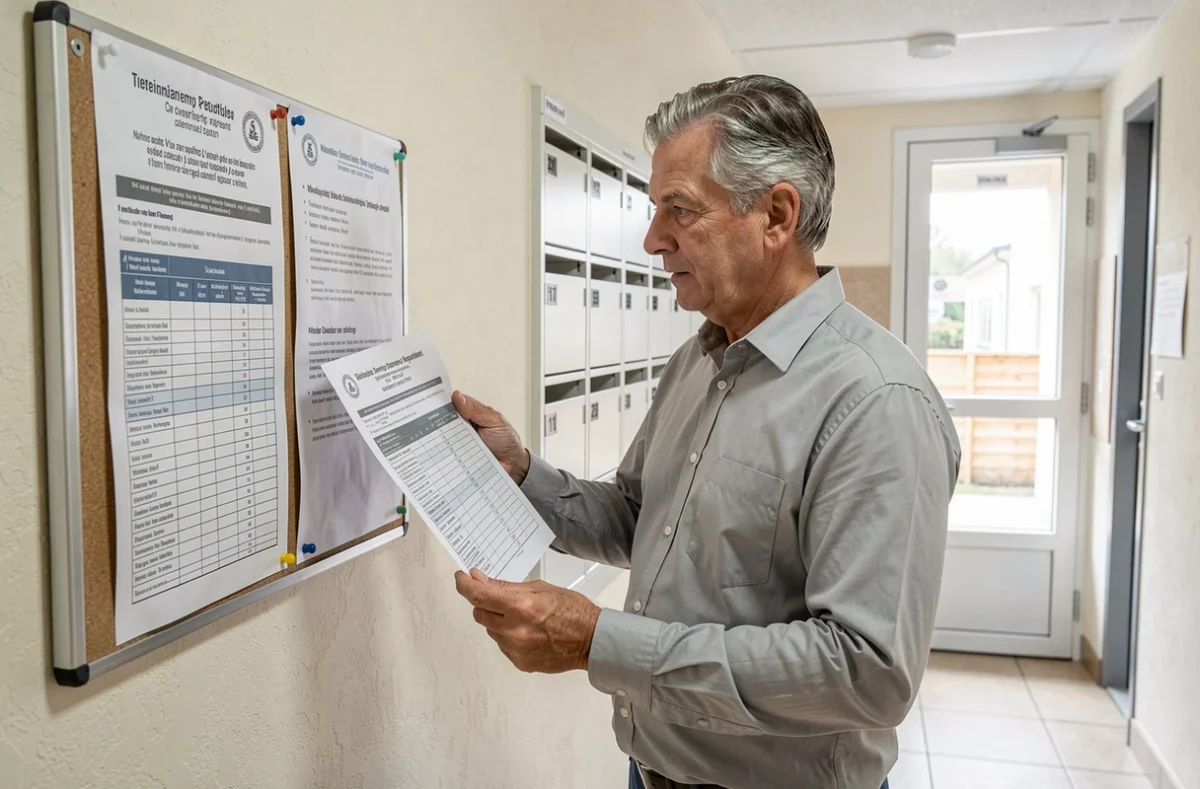
Access rights to the register: co-owners, condominium council and prospective buyers
Access rights vary depending on the requester’s status and the type of information sought. There are separate ways to check register data and obtain management documents.
- Co-owners can consult the public directory without restriction and request the summary sheet from the property manager. It recaps the building’s financial and technical information. This right is separate from consulting the online register.
- The condominium council has broader access rights to documents relating to condominium management, including contracts, invoices, service charge statements and correspondence with the property manager. These documents must be requested from the property manager, not through the public register.
- Prospective buyers can access the public directory and, as part of a sale agreement, receive mandatory documents from the notary, including the dated statement, summary sheet and minutes from the three most recent general meetings. These documents supplement—and may correct—the information shown in the register.
Consulting the public directory does not replace requesting documents from the property manager. Co-owners who rely solely on the online listing risk working with incomplete or outdated information.
Incomplete or outdated public data: which documents to request from the property manager
If a register listing shows an expired contract, an inconsistent number of units or missing financial information, the next step is to contact the current property manager, not the register itself.
Key documents to request
The summary sheet is the first document to request. It must include the syndicate’s legal structure, outstanding unpaid charges, the amount in the works fund and any ongoing legal proceedings. If the property manager is slow to provide it, a co-owner can apply to the president of the judicial court for urgent interim relief.
The minutes from the latest general meeting can confirm whether the property manager’s contract was renewed, whether any works were approved and whether the provisional budget was adopted. Comparing the general meeting minutes with the register listing immediately reveals discrepancies between reported data and decisions made.
Accounting appendices covering routine charges and works-related charges complete the financial picture. They are not included in the public register, even as open data.
Open data and its limitations
The register can be used as open data, beyond looking up buildings one by one. Datasets are published on institutional platforms. Publication covers the information specified by the French Construction and Housing Code, which excludes some of the data available through the professional portal. Third-party tools that use this data, such as contract tracking and mapping condominiums without a property manager, still depend on the accuracy of the information submitted.

Regulatory changes to the condominium register in 2026
Regulatory changes are planned, with new requirements that are not yet all in force. The scope of information to be reported is expanding, particularly in relation to buildings’ technical and energy performance.
For professional property managers, these changes mean more frequent updates to listings and stronger internal checks to ensure the consistency of submitted data. For co-owners, they should improve the reliability of the information available, provided property managers meet the reporting deadlines.
We recommend that condominium councils check at every contract renewal that the property manager has updated the register. Failure to update the register is a breach of the property manager’s legal obligations and can be raised when changing providers or inviting competing bids.
The condominium register is a transparency tool, not a certificate of compliance. Any decision based on its data should be supported by the accounting and legal documents held by the property manager.